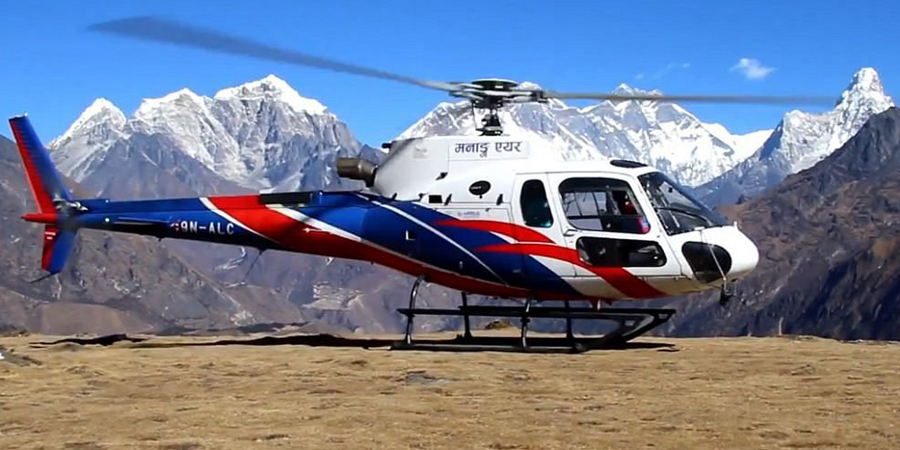
Top 7 Best Helicopter Tours in Nepal
After remaining suspended for several weeks due to protests from local communities, Nepal has restored helicopter rescue services in the Everest region. These flights, considered essential for emergency operations in the remote Himalayan area, were halted after local residents blocked helicopter landing sites, citing concerns over environmental impacts and declining tourism-related income.
Helicopters serve as a crucial mode of transportation in many mountainous and isolated parts of Nepal, where road access remains limited or nonexistent. However, the increasing use of helicopters by tourists and mountaineering teams as an alternative to the demanding trek to Everest Base Camp has become a source of controversy. While helicopter services are widely regarded as indispensable for emergency evacuations, many affluent visitors are willing to spend around $1,000 to avoid the two-week journey on foot. Local communities argue that this trend negatively affects the earnings of village businesses, porters, and trekking guides who depend on travelers passing through traditional trekking routes.
Tensions escalated in early January when protesters blocked helicopter landing areas and warned pilots not to operate in the region. In response, the Airlines Operators Association of Nepal (AOAN) temporarily suspended all helicopter services to the Everest area. Although restrictions on commercial helicopter flights remain in place, rescue operations have now resumed on humanitarian grounds. AOAN official Pratap Jung Pandey confirmed the decision on January 27, adding that discussions between local communities and aviation authorities are ongoing to find a long-term solution.
The suspension also had a significant impact on mountaineering activities in the Everest region. More than 50,000 visitors travel to the area each year, and during peak trekking seasons, helicopter traffic can reach approximately 60 flights per day. According to Mingma Gyalje Sherpa, founder of the climbing company Imagine Nepal, rescue helicopters are a critical safety resource for climbers undertaking high-altitude expeditions.
The lack of emergency evacuation services recently forced German mountaineer Jost Kobusch to abandon his planned solo winter ascent of Mount Everest. In an Instagram post shared on January 11, Kobusch cited the absence of reliable rescue options and earthquake-related risks as the primary reasons for ending his expedition.
While the restoration of rescue helicopter services is a welcome development for climbers and emergency response teams, the broader dispute over commercial helicopter operations remains unresolved. As negotiations continue, Nepali authorities face the challenge of balancing the needs of the aviation and tourism sectors with environmental concerns and the economic interests of local communities to ensure sustainable and responsible trekking and mountaineering in the Everest region.
About the Author