Flying can be exciting, but getting proper rest on an airplane is often a challenge. Whether you’re traveling for business or leisure, arriving at your destination feeling well-rested makes all the difference. This guide provides practical tips and techniques to help you sleep comfortably on flights.
Why Sleeping on Flights is Difficult
Sleeping on flights is notoriously hard due to several factors that can disrupt your rest. Understanding these challenges helps you prepare better.
Cabin Noise and Lighting
Airplanes are not naturally quiet spaces. Engine hum, announcements, and chatter can make it difficult to relax. Bright cabin lights, especially during night flights, also interfere with your body’s natural sleep rhythm.
Limited Space and Seating Posture
Economy seats often have limited legroom and reclining options. Sitting upright for hours can strain your back, neck, and shoulders, making sleep nearly impossible without proper support.
Jet Lag and Time Zone Changes
Crossing multiple time zones confuses your internal clock. Even if you manage to fall asleep on the plane, your body may still feel awake at odd hours, reducing sleep quality.
Best Seats for Sleeping on Flights
Choosing the right seat can dramatically improve your chances of getting rest.
Window Seat vs Aisle Seat
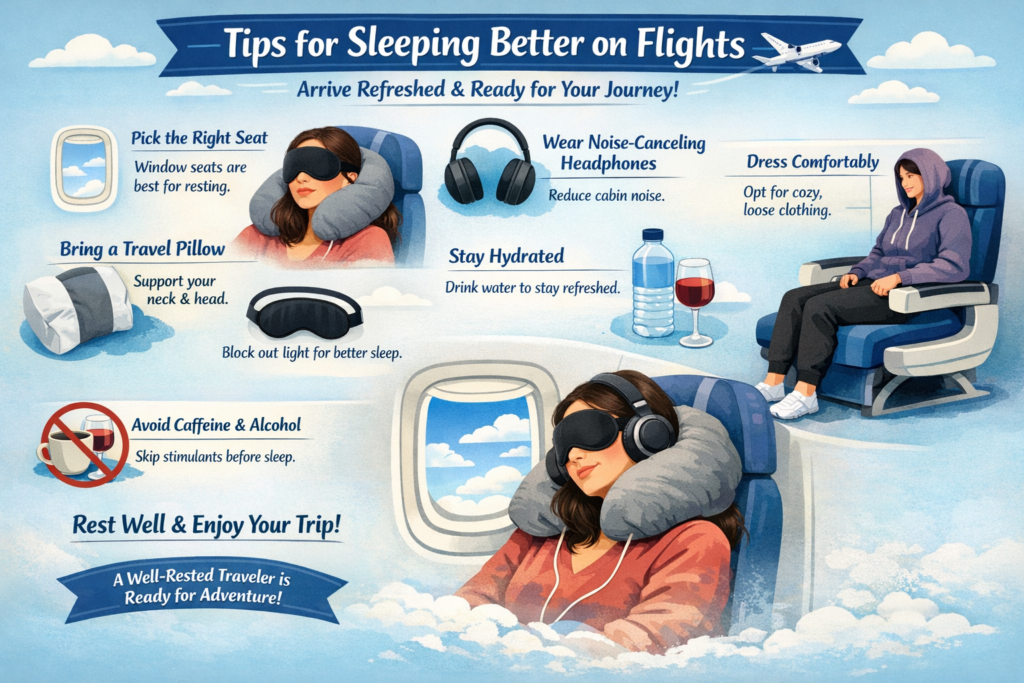
A window seat allows you to lean against the wall and control your personal space. You won’t be disturbed by fellow passengers or people walking down the aisle.
An aisle seat is convenient for stretching your legs or using the restroom without disturbing others but can make uninterrupted sleep more difficult.
Avoid Seats Near Toilets and Galleys
Seats near toilets or galley areas are prone to frequent disturbances from passenger traffic and crew activity. Opt for seats away from these busy zones for a quieter sleep environment.
Essential Items for Better Sleep
Packing the right items can make a huge difference in your comfort during the flight.
Neck Pillow
A neck pillow supports your head and prevents stiffness. Memory foam options contour to your shape, offering maximum comfort.
Eye Mask
An eye mask blocks out ambient light, helping your brain recognize it’s time to rest.
Noise-Canceling Headphones
Noise-canceling headphones or quality earplugs reduce engine noise and chatter, creating a peaceful atmosphere.
Light Blanket
Airplane cabins are often chilly. A compact light blanket or shawl keeps you warm without adding bulk.
Bonus Tips for Deep Sleep
Even with limited space, small techniques can enhance sleep quality.
Use white noise apps.
White noise or ambient sound apps help mask background noise, making it easier to drift off.
Try Breathing Techniques
Slow, deep breathing calms your nervous system. Inhale for four counts, hold for four, exhale for six to help induce relaxation.
Stay Hydrated
Dehydration can worsen fatigue and jet lag. Drink water regularly and avoid excessive caffeine or alcohol.
Must-Have Travel Sleep Essentials
Here’s a checklist of travel accessories that consistently improve in-flight sleep.
- Neck pillow for head support
- Eye mask to block light
- Noise-canceling headphones or earplugs
- Light blanket or shawl
- Comfortable socks to keep your feet warm
Having these items on hand ensures maximum comfort, especially on long-haul flights.
Pre-Flight Preparation Tips
Preparing before boarding can make a significant difference in how quickly you fall asleep.
Avoid Caffeine and Alcohol Before Boarding
Caffeine and alcohol disrupt sleep cycles. Stick to water or herbal teas to stay relaxed.
Eat Light Meals
Heavy meals can cause discomfort and indigestion. Eat light, balanced meals before your flight for easier sleep.
Choose Flights That Match Your Sleep Cycle
If possible, select flights that align with your natural sleep schedule. Night flights often promote sleep while daytime flights may require more preparation.
Wear Loose and Comfortable Clothes
Tight or restrictive clothing can hinder circulation and reduce comfort. Opt for soft, loose-fitting attire for maximum relaxation.
Techniques to Fall Asleep Faster
Even if you’re in a cramped airplane seat, these techniques can help you doze off more quickly.
Try Deep Breathing Exercises
Focus on slow, controlled breaths to lower your heart rate and signal your body it’s time to rest.
Listen to Calming Music or White Noise
Gentle music, nature sounds, or white noise helps distract the mind from cabin disturbances.
Use Guided Meditation Apps
Meditation apps offer structured routines to relax your body and mind, making sleep easier.
Relax Your Muscles Gradually
Start from your toes and work upwards, consciously relaxing each muscle group to relieve tension.
Even if you don’t sleep deeply, resting your body helps reduce fatigue and prepares you for your destination.
Tips for Long-Haul Flights
Long flights require additional strategies to stay comfortable and avoid stiffness.
Stay Hydrated Throughout the Flight
Drink water regularly, and avoid too much caffeine or alcohol, which can dehydrate you.
Get Up and Stretch Every Few Hours
Walk around the cabin or stretch in your seat to maintain circulation and prevent cramps.
Adjust Your Watch to Destination Time
Changing your watch helps you psychologically prepare for the new time zone, reducing jet lag effects.
Use Pillows to Support Your Back and Neck
Extra pillows or rolled-up blankets provide lumbar support, helping maintain a more comfortable posture.
Conclusion
Sleeping comfortably on flights may seem challenging, but with the right preparation and smart choices, it’s completely achievable. From selecting the right seat to carrying essential travel accessories, every small step contributes to a better in-flight experience.
Remember, rest is key to enjoying your trip fully. A well-rested traveler is more energetic, less stressed, and ready to explore new destinations.
Whether you’re flying for a quick weekend getaway or a long international vacation, following these tips will help you arrive refreshed and ready for your journey ahead.