Why Food Choices Matter During Flights
Flying can be fun, whether you’re going on vacation or for work, but the food you eat on the plane can have a big effect on how you feel. A lot of people who fly don’t know that the air inside an airplane is very different from the air on the ground. The cabin has less air pressure, dry air, and not much room to move around. All of these things affect how your body works, especially your digestive system.
Digestion tends to slow down at high altitudes. This means that foods that are heavy or bad for you can stay in your stomach longer, which can make you feel bloated, gassy, acidic, and uncomfortable. The dry air in the cabin can also make you dehydrated, which can make you tired, dizzy, or even give you headaches. Also, sitting in one place for a long time slows down your metabolism and blood flow, which makes it harder for your body to break down food.
Another interesting thing is that your taste buds change when you fly. Because of the pressure in the cabin, your ability to taste sweet and salty things goes down a little. This is one reason why food on airplanes often tastes bland. This means that people are more likely to eat salty or processed foods, which can make dehydration worse and discomfort.
If you pay attention to what you eat before and during a flight, it can make a big difference. Choosing the right foods can help you stay hydrated, energized, and comfortable, while bad choices can make you feel tired and uneasy the whole time you’re traveling.
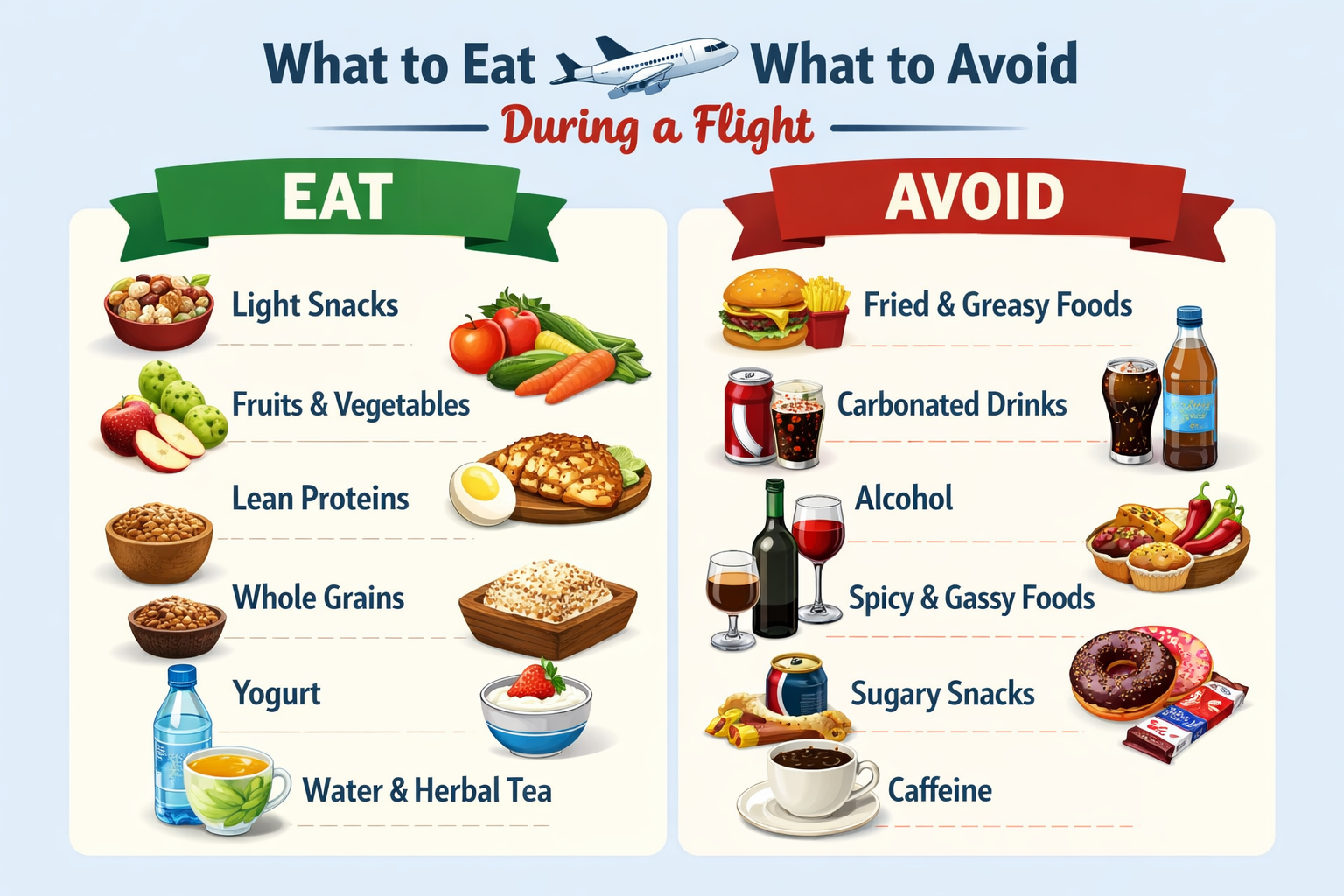
What to Eat on a Plane
1. Foods that are light and easy to digest
When you fly, it’s best to eat light and simple meals. Foods that are easy to digest lower the risk of bloating and pain. Eating heavy meals can make you feel sluggish because your digestive system works more slowly at high altitudes.
Some good choices are:
- Bananas, apples, and oranges are all fresh fruits.
- Meals with plain rice or a little seasoning
- Crackers made with whole grains
- Sandwiches with just cheese or vegetables
These foods are easy on your stomach and give you the nutrients you need without putting too much stress on your digestive system. They also help keep your energy levels steady during the flight.
2. Lean Protein Options
Protein is important for keeping you full and giving you energy, especially on long flights. But the most important thing is to pick lean protein sources that aren’t too heavy or greasy.
Some great choices are:
- Eggs that have been boiled
- Chicken that is grilled or baked
- Almonds and walnuts are nuts.
- Protein bars (low in sugar if possible)
Lean protein keeps blood sugar levels stable and stops sudden cravings for food. It also keeps you satisfied without making you feel too full or uncomfortable.
3. Foods and drinks that keep you hydrated
One of the most important things you can do to stay comfortable on a flight is to drink enough water. The air in the cabin is very dry, so if you’re not careful, you could get dehydrated quickly.
Be sure to:
- Drink water often, at least once an hour if you can.
- Pick coconut water or fresh juices
- Eat fruits that are high in water, like watermelon, grapes, and oranges.
Don’t wait until you’re thirsty, because that can be a late sign of dehydration. Drinking enough water can help with headaches, tiredness, dry skin, and even jet lag.
4. Snacks that are good for you to take with you
It’s a good idea to bring your own snacks because the food on airplanes isn’t always healthy. You can choose what you eat and know that you will always have healthy options when you are hungry.
Here are some snacks that are easy to carry:
- Trail mix is a mix of nuts and dried fruits.
- Peanut butter and jelly sandwiches
- Granola bars or energy bars
- Hummus with veggie sticks or whole-grain wraps
Bringing your own snacks also helps you stay away from expensive and unhealthy food at the airport or on the plane.
What NOT to Eat on a Plane
1. Foods that are fried and greasy
Fried and greasy foods might look good, especially at airports, but they are one of the worst things to eat on a plane. These foods are hard to digest and heavy, especially if your metabolism is already slow.
Things to stay away from:
- Fries and burgers
- Chicken fried
- Pakoras or other snacks that have been deep-fried
These foods can make you feel bloated, acidic, and uncomfortable, which can make your trip less fun.
2. Salty and Processed Foods
Many processed foods have a lot of sodium, which can make you retain water and become dehydrated. This, along with the dry cabin air, can make you feel even worse.
Some common causes are:
- Snacks in bags and chips
- Noodles that cook quickly
- Meats that have been processed
Too much salt can also make you feel tired and thirsty, so it’s best to limit it.
3. Carbonated Drinks
Sodas and other fizzy drinks may taste good, but they can make you gassy and bloated because the air pressure changes in the cabin. The bubbles in the drink make your stomach feel full, which is uncomfortable.
Instead of drinks with bubbles, choose:
- Water
- Fresh juices
- Coconut water
These options will keep you hydrated.
4. Too much caffeine and alcohol
It might be tempting to have a drink or coffee on your flight, but both alcohol and caffeine can make you dehydrated. They can also mess with your sleep cycle, especially on long flights.
Some of the effects are:
- More tiredness
- Headaches and dry skin
- Jet lag got worse
If you do eat them, do so in moderation and drink a lot of water with them.
5. Hot Foods
If you sit for a long time, spicy foods can upset your stomach and cause heartburn or acid reflux. These effects may be more noticeable when you are at a high altitude and can’t move around much.
It’s best to stay away from:
- Curries that are very spicy
- Snacks with a lot of chili
- Foods with a lot of मसाले (spices)
If you choose mild and simple foods, you will be more comfortable on the trip.
Smart Eating Tips for Air Travel
- Drink water often; try to take a few sips every hour.
- Eat smaller amounts so you don’t overeat, which can hurt your digestion.
- Eat meals that are balanced by including carbs, protein, and healthy fats.
- Take your own snacks with you to avoid unhealthy choices.
- Don’t try new foods; stick to what your body is used to.
- Time your meals wisely: Eat light before boarding and avoid heavy meals mid-flight
Final Thoughts
When you’re flying, making smart food choices isn’t just about satisfying your hunger; it’s also about making sure your trip is comfortable and stress-free. The special conditions inside an airplane can change how well you digest food, how much water you drink, and how much energy you have overall. You can feel better and get to your destination faster by eating light, healthy, and hydrating foods.
On the other hand, staying away from salty, greasy, heavy, and carbonated foods can help you avoid problems that happen a lot on planes, like bloating, dehydration, and tiredness. A little planning, like bringing your own snacks and drinking enough water, can make your trip much better.
In the end, eating well on flights keeps you healthy, full of energy, and ready to enjoy your trip as soon as you land.
About the Author