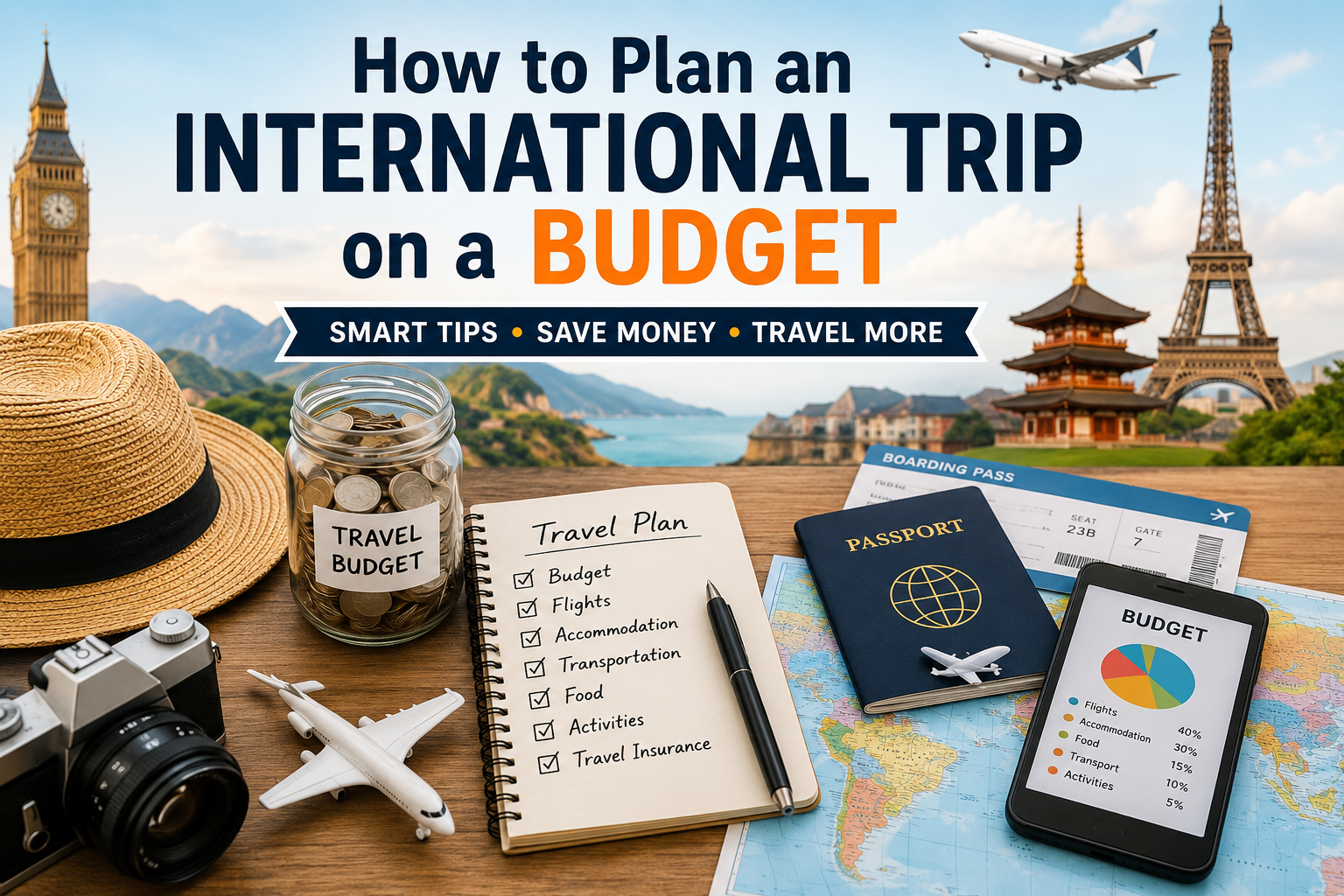
Traveling internationally doesn’t have to be expensive. With the right planning and a few smart decisions, you can explore new countries, experience different cultures, and create unforgettable memories without exceeding your budget. Whether you’re planning your first international vacation or looking for ways to travel more affordably, careful preparation can make a significant difference.
This guide covers practical tips to help you plan an international trip on a budget, from choosing the right destination to saving money on flights, accommodation, transportation, and daily expenses.
Choose a Budget-Friendly Destination
The first step in planning an affordable international trip is selecting the right destination. Some countries are naturally more budget-friendly than others because of lower accommodation costs, inexpensive public transportation, and affordable food.
Destinations across Southeast Asia, Eastern Europe, and parts of South America often provide excellent value for money. Before making a decision, compare the average daily expenses, visa requirements, and flight costs for multiple destinations.
Set a Realistic Travel Budget
Before booking anything, decide how much you’re willing to spend on your trip. A clear budget helps you avoid unnecessary expenses and keeps your travel plans realistic.
Your travel budget should include:
- Flight tickets
- Visa fees
- Accommodation
- Local transportation
- Food and beverages
- Sightseeing and activities
- Travel insurance
- Shopping and souvenirs
- Emergency expenses
Having a detailed budget also makes it easier to identify areas where you can save money.
Book Flights at the Right Time
Flights are usually the biggest expense of an international trip. Booking early often results in lower fares, especially during popular travel seasons.
Being flexible with your travel dates can also help reduce costs. Midweek departures are often cheaper than weekend flights, and flying during off-peak seasons usually offers better prices. Comparing fares across multiple booking platforms before making a reservation can help you find the best deal.
Travel During the Shoulder Season
One of the easiest ways to save money is to avoid peak tourist seasons. Traveling during the shoulder season—just before or after the busiest months—often means lower airfare, discounted hotel rates, shorter queues at attractions, and a more relaxed travel experience.
You’ll still enjoy pleasant weather in many destinations while spending considerably less than peak-season travelers.
Find Affordable Accommodation
Accommodation doesn’t always have to be expensive. Depending on your travel style, you can choose from budget hotels, hostels, guesthouses, vacation rentals, or homestays.
When selecting accommodation, don’t focus only on the room price. Consider the location, access to public transportation, nearby restaurants, and guest reviews. Staying slightly away from major tourist areas can often save a substantial amount without sacrificing convenience.
Use Public Transportation
Instead of relying on taxis or private transfers, use local buses, metro systems, trains, or trams whenever possible. Public transportation is usually much more affordable and provides a better opportunity to experience daily life in your destination.
Many cities also offer tourist transport passes that allow unlimited travel for one or several days, making sightseeing even more economical.
Eat Like a Local
Dining at tourist restaurants can quickly increase your travel expenses. Instead, explore local eateries, family-run restaurants, food markets, and cafés where residents typically eat.
Local cuisine is often more authentic, fresher, and significantly cheaper. Visiting supermarkets for breakfast items, snacks, and bottled water can also help reduce your daily food budget.
Plan Your Itinerary in Advance
A well-planned itinerary helps you maximize your time while avoiding unnecessary spending. Research attraction opening hours, ticket prices, transportation routes, and nearby places before your trip.
Many destinations also offer free museums on certain days, public parks, historical walking tours, cultural events, and scenic viewpoints that can enrich your travel experience without increasing your expenses.
Pack Smart to Avoid Extra Charges
Packing efficiently can help you avoid airline baggage fees and unnecessary purchases during your trip.
Carry only the essentials, including comfortable clothing, walking shoes, a universal travel adapter, chargers, basic medicines, travel documents, and weather-appropriate accessories. Traveling with lighter luggage also makes moving between destinations easier and more convenient.
Purchase Travel Insurance
Although some travelers skip travel insurance to save money, it can prevent much larger financial losses in case of medical emergencies, flight cancellations, lost baggage, or travel disruptions.
A small investment in travel insurance can provide valuable peace of mind throughout your journey.
Manage Your Money Wisely
Before leaving, inform your bank about your travel plans if necessary and carry multiple payment options. Avoid exchanging large amounts of currency at airports, where exchange rates are often less favorable.
Using international debit or credit cards with low foreign transaction fees can also help reduce overall travel costs.
Track Your Daily Expenses
Keeping track of your spending throughout the trip helps you stay within budget. Recording your daily expenses allows you to identify unnecessary purchases and adjust your spending before your budget gets out of control.
Even simple notes on your smartphone can help you monitor your finances effectively.
Avoid Common Budget Travel Mistakes
Many travelers spend more than necessary because of poor planning. Booking flights at the last minute, staying only in expensive tourist areas, using taxis for every journey, overpacking luggage, or ignoring visa and insurance requirements can significantly increase overall travel costs.
Planning ahead and making informed decisions can help you avoid these common mistakes.
Focus on Experiences Instead of Luxury
The most memorable travel experiences rarely come from expensive hotels or luxury shopping. Walking through local neighborhoods, trying regional cuisine, exploring historical sites, watching sunsets, meeting local people, and discovering hidden attractions often become the highlights of any international trip.
Prioritizing experiences over unnecessary luxury allows you to travel longer while creating more meaningful memories.
Final Thoughts
Planning an international trip on a budget is all about making smart choices before and during your journey. Selecting an affordable destination, booking flights early, choosing budget-friendly accommodation, using public transportation, and managing your daily expenses carefully can dramatically reduce travel costs without affecting the overall experience.
With thoughtful planning and a flexible approach, international travel can be affordable, enjoyable, and rewarding. No matter where you choose to go, the key is to spend wisely, stay organized, and make every moment count.
About the Author