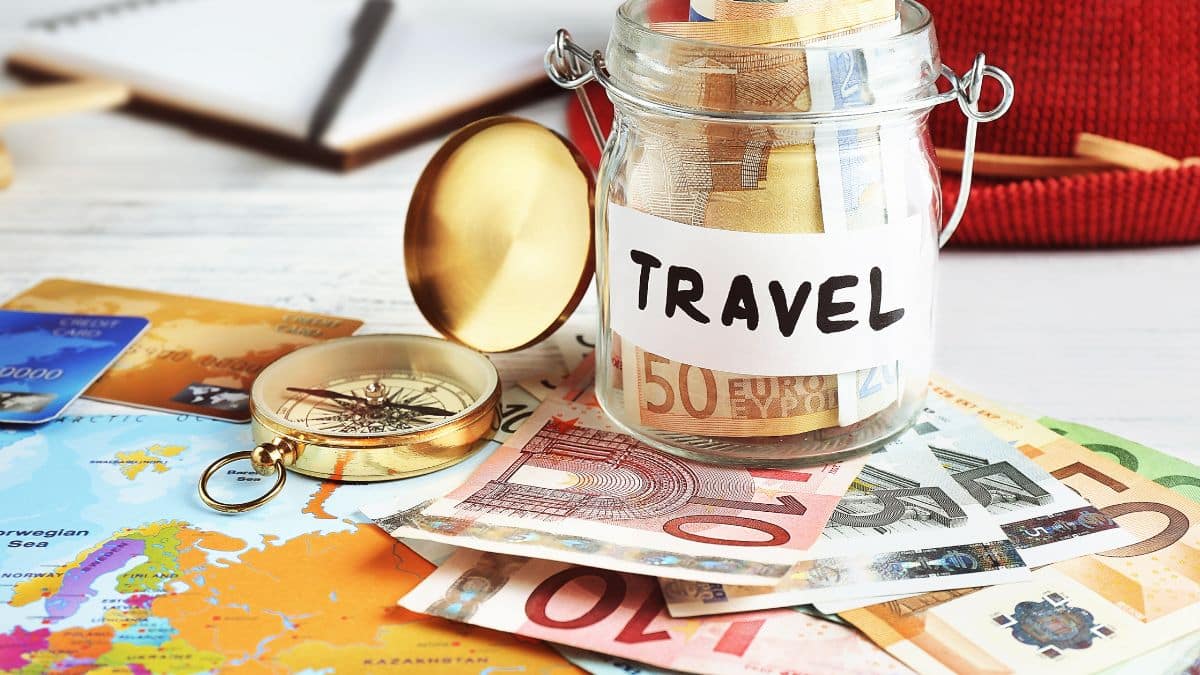
How Much Foreign Currency Should You Carry on an International Trip? This is one of the most common questions travelers ask before going abroad. Carry too much cash and you may have unnecessary security risks and conversion losses. Carry too little and you could face problems if your card doesn’t work, an ATM is unavailable or you need cash for small expenses.
For Indian travelers, the ideal approach in 2026 is usually to carry a limited amount of local currency in cash and use cards, UPI or other digital payment options wherever they are accepted.
The exact amount depends on your destination, trip length, hotel arrangements, transportation and spending habits.
How Much Cash Should You Carry?
As a general rule, most travelers don’t need to carry their entire travel budget in physical currency.
For a typical 5–7 day international trip, keeping approximately 20%–30% of your expected daily spending in cash can be a reasonable starting point, with the rest available through cards or other reliable payment methods.
For example, if you expect to spend ₹5,000 per day on food, transportation and sightseeing, you could consider having roughly ₹1,000–₹1,500 worth of local currency available as physical cash.
The remaining amount can be kept accessible through your debit card, credit card or other payment methods.
However, this is only a guideline. A destination where cash is widely used may require more physical currency.
What Factors Determine How Much Foreign Currency You Need?
There is no universal amount that works for every traveler. Consider these factors before exchanging your money.
1. Destination
Your destination is probably the biggest factor.
In major cities such as Singapore, London, Dubai or Kuala Lumpur, card payments are widely accepted.
However, smaller towns, local markets, taxis, food stalls and smaller businesses may still prefer cash.
Research your destination’s payment habits before deciding how much currency to carry.
2. Length of the Trip
A three-day city break and a three-week backpacking trip obviously require different amounts of spending money.
For a short trip, you may only need a small emergency cash reserve.
For longer trips, relying entirely on physical currency becomes inconvenient and potentially risky.
3. Accommodation
If your hotel, resort or vacation rental has already been paid for, your daily cash requirement will be significantly lower.
If accommodation needs to be paid locally, make sure you keep enough money available for the booking and any required deposit.
4. Transportation
Transportation can consume a significant portion of a travel budget.
Consider whether you’ll be using:
- Metro and trains
- Public buses
- Taxis
- Ride-hailing apps
- Rental cars
- Airport transfers
- Intercity transportation
If your destination relies heavily on cash-based taxis or local transport, keep some physical currency readily available.
5. Activities and Attractions
Some attractions allow online or card payments, while smaller tours and local activities may require cash.
If you’re planning activities such as markets, local tours, boat rides or excursions, check the accepted payment methods beforehand.
A Simple Cash Budget for a 7-Day International Trip
Here’s a practical example for a traveler who has already paid for flights and accommodation.
| Expense | Approx. Daily Budget |
|---|---|
| Food | ₹1,500–₹2,500 |
| Local transport | ₹500–₹1,000 |
| Sightseeing | ₹500–₹1,500 |
| Shopping/miscellaneous | ₹500–₹1,000 |
| Emergency reserve | Separate |
If your estimated daily spending is around ₹3,000–₹5,000, you don’t necessarily need to carry ₹21,000–₹35,000 in physical cash.
Instead, you could keep a smaller amount of local currency for immediate expenses and have the rest available through cards or other payment methods.
How Much Cash Should You Carry for Different Trip Lengths?
3-Day Trip
For a short international trip, approximately ₹5,000–₹10,000 equivalent in local currency can be a reasonable cash reserve, depending on the destination.
5-Day Trip
Consider keeping approximately ₹8,000–₹15,000 equivalent in cash if you’re traveling to a destination where cards are widely accepted.
7-Day Trip
For a one-week vacation, ₹10,000–₹20,000 equivalent in physical cash may be sufficient for many travelers, while keeping the remaining budget accessible electronically.
10–14 Day Trip
For longer trips, don’t simply multiply your entire budget into cash. Instead, maintain a smaller physical cash reserve and use cards or ATMs for additional spending when required.
These figures are guidelines rather than fixed requirements. A backpacker in a cash-heavy destination may need more cash, while a traveler staying at a resort with prepaid services may need considerably less.
Should You Carry Indian Rupees or Local Currency?
Generally, you should have some local currency available when you arrive.
This is particularly useful for:
- Airport transportation
- Small food purchases
- Tips
- Public transportation
- Emergency expenses
- Places that don’t accept cards
However, carrying a large amount of Indian rupees with the expectation of exchanging them everywhere isn’t always practical.
For some destinations, INR may not be easily exchangeable or may receive less favorable rates.
Before traveling, check whether your destination has good INR-to-local-currency exchange availability.
Should You Exchange Currency in India or Abroad?
There is no single answer for every destination.
Compare the final amount of local currency you receive, rather than simply comparing the advertised exchange rate.
Currency exchanges can include:
- Exchange-rate margins
- Commission
- Service charges
- Airport premiums
- Other fees
Airport currency exchange counters are convenient, but they may not always offer the best rates.
A practical strategy is to exchange enough money before departure for your initial expenses and then use cards or reputable ATMs when necessary.
Is It Better to Carry a Forex Card or Credit Card?
For many international travelers, carrying a combination of payment methods is safer than depending on cash alone.
Credit Card
Credit cards can be useful for:
- Hotels
- Restaurants
- Flights
- Shopping
- Car rentals
- Online bookings
Some cards also offer travel rewards or reduced foreign-exchange fees.
Forex Card
A forex card allows you to load foreign currency before your trip and use the card abroad.
Potential advantages include:
- Controlled travel budget
- Reduced dependence on physical cash
- Convenient international payments
- Ability to lock in an exchange rate for certain products
However, travelers should carefully check reload fees, ATM charges, cross-currency fees and other terms before choosing one.
Debit Card
Your international debit card can serve as an important backup.
Before departure, confirm that:
- International transactions are enabled
- Your PIN works abroad
- You know the applicable foreign transaction charges
- Your bank has your current contact information
Don’t Depend on Just One Payment Method
One of the biggest mistakes travelers can make is carrying only one payment option.
Imagine your only credit card stops working while you’re abroad.
Or your phone battery dies while you need a digital payment.
Or an ATM refuses your card.
Having backup options can prevent a minor problem from becoming a major travel issue.
A good combination can include:
Cash + credit/debit card + backup card + digital payment option
Keep your backup card separately from your primary card.
What About UPI When Traveling Abroad?
Indian travelers should also check whether UPI is supported at their destination.
UPI international acceptance has expanded in several countries, but availability can vary by country, merchant and payment setup.
Don’t assume that UPI will work everywhere simply because it works in India.
Before traveling, check your bank’s current international UPI functionality and whether the destination supports the relevant UPI payment arrangement.
Keep Emergency Cash Separate
Don’t keep all your foreign currency in your wallet.
Instead, divide your cash into at least two locations.
For example:
Wallet: Small amount for daily expenses
Money pouch: Main cash reserve
Hotel safe: Additional emergency funds, where appropriate
This reduces the risk of losing your entire cash supply if your wallet is lost or stolen.
What If You Run Out of Foreign Currency?
Running out of cash doesn’t necessarily mean your trip is over.
Depending on the destination, you may be able to:
- Withdraw money from an ATM
- Use a credit card
- Use a debit card
- Receive money through an authorized transfer service
- Exchange additional funds
- Use supported digital payment services
Before leaving India, make sure you know how to contact your bank from abroad.
It’s also worth saving your bank’s international customer-service number offline.
How Much Emergency Money Should You Keep?
Apart from your normal travel budget, maintain a separate emergency reserve.
A practical target could be around ₹10,000–₹20,000 equivalent, depending on your destination and trip length.
This emergency money should ideally be used only for unexpected situations such as:
- Emergency transportation
- Unexpected hotel expenses
- Medical expenses
- Lost luggage
- Replacement documents
- Unexpected flight changes
For expensive destinations, you may want a larger emergency reserve.
Common Mistakes to Avoid
Carrying Too Much Cash
Having a large amount of cash increases the consequences of loss or theft.
Carrying Too Little
Don’t arrive at a new country with zero local currency and assume your card will work everywhere.
Exchanging Everything at the Airport
Airport exchange counters are convenient, but convenience may come at a higher cost.
Forgetting International Card Activation
Some Indian cards have international transactions disabled by default or require specific settings.
Keeping All Cards Together
If your wallet disappears, losing every payment method at once can create unnecessary problems.
Ignoring ATM Fees
Your Indian bank and the foreign ATM operator may both charge fees. Check the applicable charges before making repeated withdrawals.
A Practical Strategy for Indian Travelers
For most international trips, a balanced approach works well:
Before leaving India:
- Research the payment habits of your destination.
- Exchange enough local currency for your first day or two.
- Carry at least one international-enabled card.
- Keep a backup card separately.
- Check your bank’s foreign transaction and ATM fees.
- Save emergency contact numbers offline.
- Keep a separate emergency cash reserve.
During the trip:
- Use cards where they are widely accepted.
- Keep small notes and coins for everyday purchases.
- Avoid carrying your entire travel budget in your wallet.
- Withdraw additional cash only when necessary.
- Monitor your card transactions regularly.
Final Verdict
So, how much foreign currency should you carry on an international trip?
For many travelers, carrying enough local currency for the first 1–2 days plus an emergency reserve is a better strategy than converting the entire travel budget into cash.
For a typical 5–7 day vacation, having roughly ₹8,000–₹20,000 equivalent in physical foreign currency can be a reasonable starting point, depending on the destination and your spending style.
The rest of your travel budget can remain accessible through credit cards, debit cards, forex cards and supported digital payment methods.
The key is to maintain a balance: don’t carry so much cash that losing it becomes a disaster, but don’t travel with so little that a card or ATM problem leaves you stranded.
Exchange rates also fluctuate, so check the current rate shortly before your trip rather than relying on an old conversion rate.
Ultimately, the best travel-money strategy is to carry some cash, have multiple payment options and keep a separate emergency reserve.
About the Author