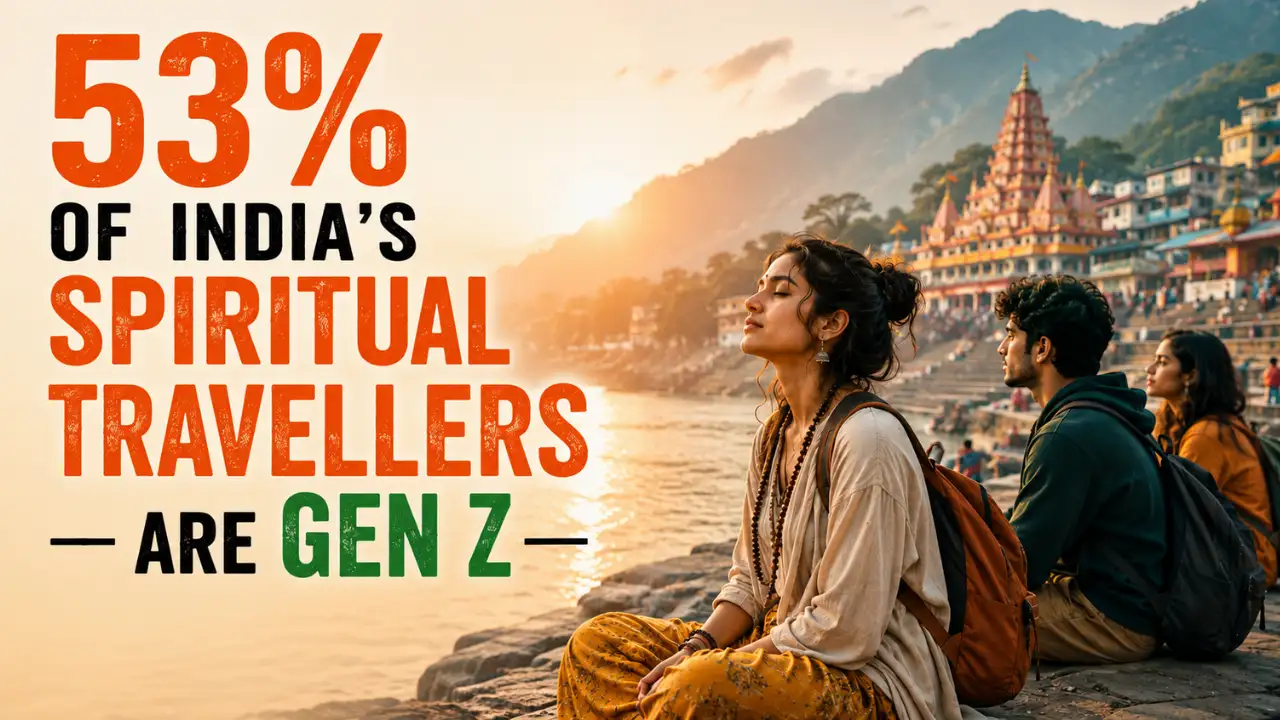
India’s spiritual tourism sector is evolving rapidly, and Gen Z is emerging as the key force driving this transformation. According to a recent redBus report, young travelers accounted for more than 53% of all bookings to major spiritual destinations across the country during FY26. The data highlights a growing shift among India’s youth toward faith-based and purpose-driven travel experiences.
Traditionally, religious and spiritual travel was associated mainly with older generations and family pilgrimages. However, today’s young travelers are increasingly viewing these journeys as opportunities for inner peace, cultural connection, mental well-being, and personal growth. The report suggests that spiritual tourism is no longer just about devotion but is becoming a holistic lifestyle experience for the younger generation.
Among Gen Z travelers, routes such as Bengaluru–Tirupati, Hyderabad–Tirupati, Chennai–Thanjavur, and Indore–Ujjain have emerged as some of the most popular. The increasing demand on these routes reflects the growing interest of young travelers in temple towns and pilgrimage destinations, particularly among those seeking a blend of spirituality, culture, and heritage.
Industry experts attribute this trend to several factors, including improved transportation infrastructure, easy access to online booking platforms, the influence of social media, and a rising preference for experience-driven travel. Modern travelers are no longer satisfied with simply visiting religious sites; they are also exploring local cuisine, historical landmarks, cultural attractions, and wellness experiences as part of their journeys.
The report further notes that spiritual tourism has expanded beyond the traditional concept of pilgrimage. For many young travelers, these trips serve as a means of self-discovery, mindfulness, and emotional well-being. As a result, many spiritual destinations are attracting visitors throughout the year rather than only during major festivals and religious occasions.
The growth of India’s spiritual tourism sector has also been supported by infrastructure improvements, enhanced road and rail connectivity, and government initiatives aimed at promoting religious and heritage tourism. Destinations such as Tirupati, Ujjain, Varanasi, Haridwar, and Ayodhya continue to welcome millions of visitors annually, with young travelers contributing an increasingly significant share of overall tourism activity.
As travel preferences continue to evolve, Gen Z is giving spiritual tourism a fresh identity in India. The unique combination of faith, culture, wellness, and self-reflection is resonating strongly with younger travelers. With this trend gaining momentum, spiritual tourism is expected to remain one of the fastest-growing segments of India’s travel industry in the years to come.
About the Author