A visit to hill stations and trekking trails offers the best way of experiencing nature and oneself, but the experience may not be entirely fulfilling without the correct choice of shoes. While hiking through misty routes or climbing uphill with steep and rocky terrain or slippery routes due to heavy rains, your feet require adequate cushioning and protection to enhance performance and minimize injuries. In such scenarios, the selection of trekking shoes for women becomes particularly critical since men’s needs for fit, comfort, and stability differ from those of women.
Women’s trekking shoes must meet a number of criteria to ensure they provide adequate cushioning, durability, and comfort. Firstly, such shoes ought to offer superior grip on rough terrains and high-altitude environments. Additionally, these shoes must have sufficient cushioning to reduce foot strain while moving around for prolonged periods. Waterproof materials or designs also become necessary to cope with the adverse effects of heavy rains during outdoor activities. Furthermore, women’s shoes ought to be breathable to keep their feet cool when trekking in sunny environments.
Why the Right Shoes Matter for Hill Stations and Trekking
Hill stations and treks might be picturesque, but the surface may become tough, uneven, slippery, and unstable at many places. It makes it imperative to wear appropriate footwear that provides protection, comfort, and ease while undertaking the journey.
Trekking boots are specifically designed to withstand the challenging nature of rugged paths and slippery conditions. They have superior traction that enables you to maintain balance even if you encounter rain and loose stones. Moreover, they provide excellent ankle support that keeps the chance of spraining your foot to an absolute minimum.
Furthermore, the proper footwear ensures reduction in foot fatigue and pain as well. The importance becomes further pronounced in case you spend many hours trekking and carrying loads. The most significant advantage that comes with using trekking boots is the safety aspect. You keep your feet safe from sharp rocks, thorns, cold climate, and dampness.
Comfort Comes First
When it comes to hill stations and trekking, comfort should always be your top priority. Comfortable shoes make a huge difference in how much you enjoy your adventure. Even the most scenic trail can feel exhausting and painful if your feet hurt or get blisters. That’s why choosing shoes that fit well and feel good from the very first step is essential.
Comfortable trekking shoes should have good cushioning to support your feet over long distances and on rough terrain. They should also have enough room in the toe box so your toes aren’t cramped, and they shouldn’t rub or pinch any part of your feet. Breathability is another key factor—shoes that allow air to circulate help prevent excessive sweating, bad odor, and discomfort on warm days.
A well-fitted, comfortable pair of shoes ensures that your feet stay happy even after hours of walking, climbing, or exploring. When your feet feel good, your entire body feels good, and you can focus fully on the beautiful landscapes, fresh air, and the joy of trekking. After all, a memorable adventure starts with happy, comfortable feet.
Comfort Comes First
In connection with trekking and hill stations, one should take into account the importance of having comfortable shoes. The quality of footwear will affect not only the level of comfort but also the general impression about the entire trip. The most interesting trail and picturesque views will become a burden for anyone when feet get blisters or pain during the trekking process. Therefore, it is vital to pay attention to the comfort of the shoes, ensuring that everything fits perfectly.
A quality, comfortable pair of trekking shoes should provide sufficient cushioning and roominess in the toe zone without squeezing and rubbing of any part of the foot. Breathability is also an important component of comfortable footwear since it prevents excess sweating, odor, and overheating during the journey. Properly selected shoes will ensure comfort for hours of walking, climbing or hiking, providing pleasant feelings for the whole body.
Thus, comfortable shoes are an important aspect of the trekking process that needs to be taken into account when preparing for a trip to hill stations. Comfort for feet will contribute to a better impression of the entire journey, allowing you to fully enjoy the views, landscapes, and clean air.
Best Types of Shoes for Hill Stations and Trekking for Women
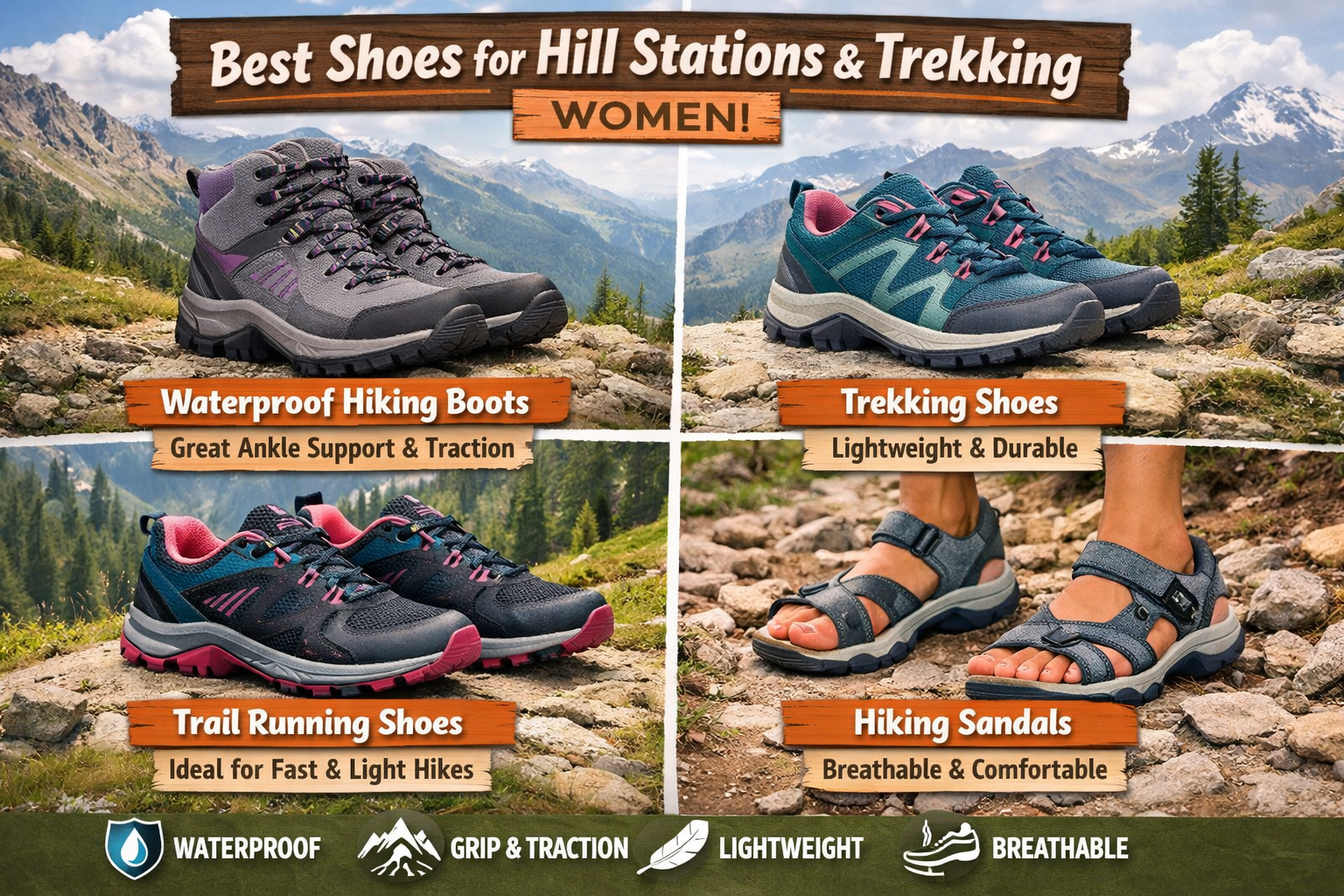
Selection of appropriate shoe types should be made taking into account the nature of the terrain, distances, and weather conditions. Below, we will take a look at different types of shoes specifically recommended to ensure women comfort, safety, and proper support when traveling to the hills and trekking:
High Cut Trekking Boots
Trekking boots are especially recommended for serious trekkers who want maximum protection from injury.
Trail Running Shoes
Trail running shoes are rather light and flexible. They can be used during day trips, hiking on moderate trails, and walking on rugged terrains. They have pretty good traction and cushioning as well as natural movement ability that can be an advantage for people who like speed.
Hiking Shoes
Unlike trail shoes, hiking ones are stronger and provide much better protection and cushioning. They are also more durable and comfortable than other types of footwear for long walking distances with a moderate backpack.
Mid Cut Hiking Boots
Mid-cut hiking boots protect your ankles and are perfect for mountainous terrain, wet and muddy trails, and for different weather conditions. In terms of their functions, they represent an excellent combination of support and mobility.
Sports Shoes with Good Grip
As for the trip to hill stations and hiking, sports shoes equipped with a good grip should be worn. It means that such a footwear will hold on slippery rocks, damp grass, scattered pebbles, and rocky terrain. It will prevent slippage and falls which might cause injuries during the hike on a difficult track.
Outdoor sports shoes tend to have a more advanced tread pattern and rubber outsole providing great traction. Therefore, they allow staying firm on feet in the process of movement even in cases where it is very wet or the terrain is not solid. Opposed to the gym shoes, such outdoor sports footwear will provide control while ascending and descending hills.
Moreover, comfortable outdoor sports footwear will ensure cushioning effect, which will help avoid blisters and any possible injuries during a prolonged walking. The shoes should have an accurate fitting in the area of heel and mid-foot preventing slippage in the process of movement.
For women preparing themselves for trips to hill stations and hikes, it is necessary to choose reliable sports shoes with a good grip. One would feel secure with every step taken.
Waterproof Hiking Shoes
The moment one starts venturing into trails, there will be wet footpaths, muddy roads, crossing streams, and torrential rains. That is when waterproof hiking shoes can come in handy. They protect the feet from getting wet during treks.
These hiking shoes have advanced materials and membranes such as Gore-Tex and others that prevent water penetration while ensuring that perspiration from inside the feet exits. The shoes, therefore, prevent the wearer from blisters, cold feet, and discomfort since the feet remain dry from both internal and external moisture.
Besides being waterproof, hiking boots should have excellent ankle support, traction, and durability. The boots should also have sturdy soles with rough and deep tread designs that enable one to walk comfortably on uneven grounds, mud, slippery rocks, and slippery slopes.
Women planning to trek areas with unexpected climate changes, rainy periods, and high levels of humidity would benefit by using waterproof hiking shoes. One can trek confidently in the morning when it is foggy or walk on damp footpaths without having to worry about wet socks.
Features to Check Before Buying
Choosing appropriate shoes for hill stations and trekking entails going beyond style considerations. These are some of the main features worth considering when purchasing shoes for trekking and hill stations for women:
- Grip
Choose shoes that have deep tread patterns and sticky rubber on the sole. This will provide sufficient grip to avoid slipping in wet rocks, mud, and other challenging terrains. - Comfort
It is advisable to buy shoes that fit properly while ensuring there is adequate space in the toe box area. The shoes must be comfortable for the wearer without rubbing against their feet. - Support for Ankles
High or mid-cut boots that provide good support to the ankles work best for challenging and rocky terrains. - Waterproofing or Resistance
Shoes designed with good waterproofing properties ensure your feet remain dry in case of rain or puddles, hence avoiding the development of blisters and discomfort. - Breathability
Proper breathability of the shoes ensures your feet do not get sweaty as a result of poor ventilation. - Durable Materials
Ensure that the shoes are made from durable materials as this prevents damage when walking through rocks and rugged terrain.
Shoes to Avoid for Hill Stations and Trekking
When preparing for hill station trips and trekking adventures, choosing the right footwear can make all the difference. Just as important as knowing what shoes to pick is knowing which ones to avoid. Wearing the wrong type of shoes can lead to discomfort, blisters, slips, and even injuries. Here are the types of shoes you should avoid for hill stations and trekking:
1. Regular Casual Sneakers
Everyday sneakers may look comfortable, but they are not built for uneven terrain or rough trails. Their flat soles and weak grip make slipping more likely, especially on wet or rocky surfaces.
2. Flip-Flops or Sandals
Open-toed footwear like flip-flops and sandals offers no protection, ankle support, or traction. They are unsafe for hiking and can easily lead to injuries from rocks, roots, or uneven ground.
3. Fashion Shoes
Heels, wedges, ballet flats, and other fashion shoes are only made for style, not hiking. They lack cushioning, grip, and durability, and wearing them on trails can be painful and risky.
4. Old or Worn-Out Shoes
Even good shoes lose their effectiveness when the soles wear thin or the cushioning breaks down. Old, worn-out footwear doesn’t provide proper support or grip, making your trek uncomfortable.
5. Heavy Boots Without Support
Very heavy boots that lack proper ankle support or fit can tire your feet quickly and cause blisters. Heavy weight alone isn’t bad, but it should be balanced with support and comfort.
6. Shoes Without Traction
Flat-soled shoes or ones with smooth bottoms are unsafe for trekking. Always avoid shoes that don’t have visible tread or grip patterns.
Conclusion
Choosing the right shoes for hill stations and trekking is one of the most important steps for a safe and enjoyable trip. The right footwear provides comfort, strong grip, ankle support, and protection from rough terrain, slippery paths, and changing weather conditions. For women, selecting shoes that fit properly and offer the right balance of cushioning and durability can prevent foot pain, blisters, and injuries.
Whether you choose trail running shoes, hiking shoes, or waterproof trekking boots, always focus on quality and comfort over style. Also, avoid footwear like sandals, flat casual shoes, or worn-out sneakers, as they can increase the risk of slipping and discomfort.
In the end, good trekking shoes make your journey smoother, safer, and more enjoyable—allowing you to fully enjoy the beauty of hill stations and the thrill of trekking without worrying about your feet.
About the Author