Introduction
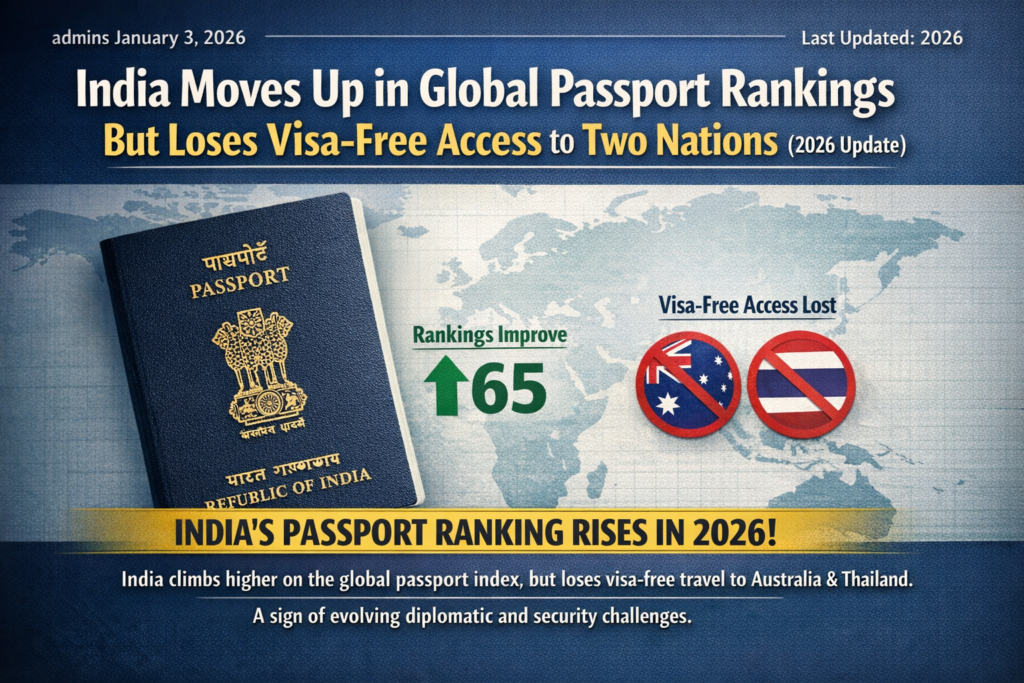
India’s passport has shown a significant improvement in global rankings in 2026, but the update comes with a surprising twist—Indian travelers have lost visa-free access to two countries.
This mixed development highlights how global travel is evolving with changing diplomatic relations and security policies.
India’s Passport Ranking Improvement in 2026
According to the Henley Passport Index 2026, India has climbed 10 positions, moving from 85th in 2025 to 75th in 2026.
Key Reasons:
- Better diplomatic relations
- Increased global mobility
- Growing acceptance of Indian travelers worldwide
Current Status:
Currently, Indian passport holders can access 56 countries without a prior visa (including visa-free, visa-on-arrival, and e-visa options).
Visa-Free Access Reduced: What Changed?
Countries Removed:
Despite the ranking improvement, Indian travelers now have access to one fewer visa-free destination compared to last year.
- Iran
- Bolivia
Impact:
These countries have changed their visa policies, requiring Indians to apply for a visa or e-visa in advance.
What This Means:
- More documentation required
- Less flexibility for last-minute travel
- Slight reduction in travel convenience
Why Did This Happen?
Explanation:
This situation may seem confusing—ranking improved, but access reduced.
Here’s why:
- Passport rankings depend on overall global mobility and agreements, not just total visa-free countries
- Some countries tighten rules due to:
- Security concerns
- Immigration policies
- Fraud or misuse risks
Example:
For example, Iran updated policies due to security and migration concerns, while Bolivia moved to a pre-approval e-visa system.
Positives of This Change (Important for Travelers)
1. Strong Global Ranking Growth
Benefit:
India’s jump to 75th position shows steady improvement in international standing.
2. Better Travel Opportunities
Benefit:
Access to 56 countries still provides strong travel flexibility for Indians.
3. Digital Visa Systems Increasing
Trends:
More countries are shifting to:
- e-visas
- online approvals
- faster processing
Benefit:
This makes travel more structured and secure.
4. Improved Diplomatic Relations
Impact:
The ranking rise reflects the following:
- Stronger global ties
- More bilateral agreements
- Increased trust in Indian travelers
5. Easier Travel in Popular Regions
Regions:
Countries in Southeast Asia and the Middle East continue to offer:
- Visa-free entry
- Visa-on-arrival
- Simplified processes
Benefit:
This is where most Indian travelers go—so impact is minimal for the majority.
What This Means for Indian Travelers
Important Tips:
- Always check latest visa rules before booking
- Plan trips in advance (especially for countries like Iran and Bolivia).
- Focus on visa-friendly destinations for hassle-free travel
- Use e-visa systems for smoother entry
Conclusion
India’s passport growth in 2026 is a positive sign for global mobility, even though a few visa-free privileges were lost.
Big Picture:
- Travel is becoming more digital and secure
- Indian passport strength is gradually improving
- Opportunities for international travel are still expanding