Staying at a hotel is meant to make your trip comfortable and stress-free, but sometimes the food doesn’t meet expectations. It might be bland, overly oily, not fresh, or simply not suited to your taste or dietary needs. This can be frustrating, especially after a long day when you’re looking forward to a satisfying meal.
The good part is, there are simple and practical ways to handle this situation without letting it affect your overall travel experience.
Why Hotel Food Quality Matters During Travel
Food plays a key role in how enjoyable and comfortable your trip feels. While traveling, your body needs proper nutrition to stay active and energized. Poor-quality food can leave you feeling tired, uncomfortable, or even unwell.
If the food isn’t fresh or hygienic, it can lead to stomach issues, which may disrupt your travel plans, whether it’s sightseeing, meetings, or relaxation.
A good hotel meal should be fresh, clean, properly cooked, and offer enough variety to suit different tastes and dietary needs.
Common Issues Travelers Face with Hotel Food
Many travelers face problems with hotel meals at some point. Common complaints include food being too spicy or salty, served cold, lacking variety, or not matching what was described on the menu.
Sometimes, even breakfast buffets have limited options, which can be challenging for families, vegetarians, or people with food allergies.
Signs That Food May Not Be Fresh
Before eating, watch out for these warning signs:
- Unpleasant smell
- Wilted or dull-looking vegetables
- Stale bread or bakery items
- Food served cold when it should be hot
- Sour or unusual taste
- Excessively greasy texture
If you notice any of these, it’s better to avoid eating that meal.
Always Put Health First
Don’t feel pressured to eat something just because it’s included in your hotel package. Your health matters more than the cost. Poor food hygiene can lead to food poisoning, dehydration, or stomach infections.
Quick Safety Tip
If the food smells off, tastes strange, or looks undercooked, stop eating immediately and ask for a fresh replacement.
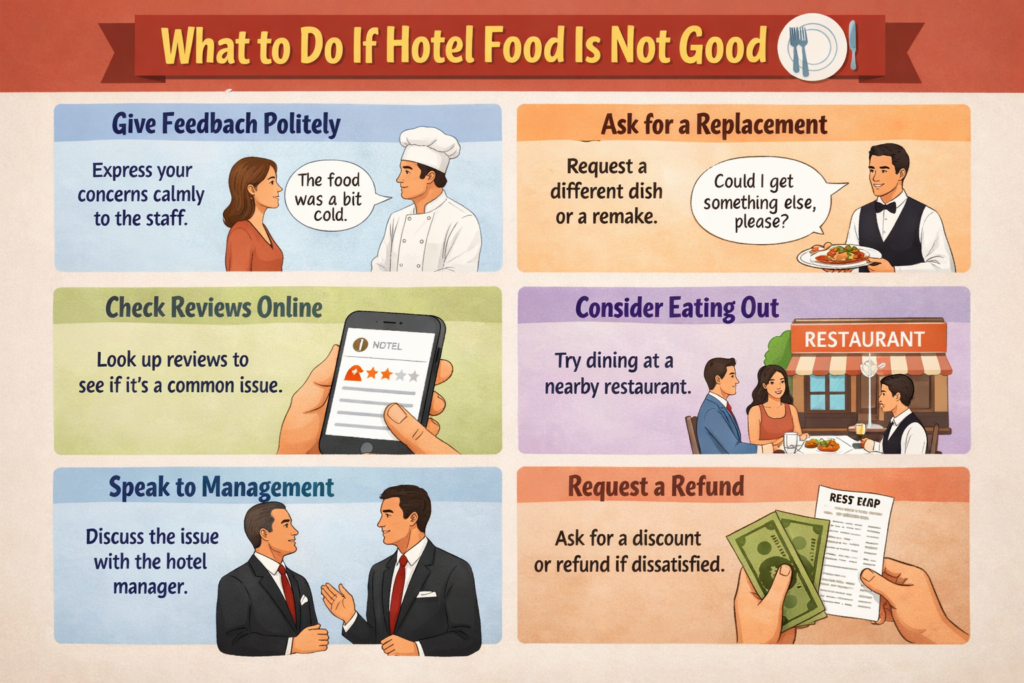
What to Do If the Hotel Food Is Not Good
Talk to the Hotel Staff Politely
Start by informing the hotel staff or restaurant manager. Most hotels value guest feedback and will try to resolve the issue quickly.
Explain clearly what’s wrong—whether the food is cold, too salty, stale, or different from what you ordered. In many cases, they will replace the dish or offer a better alternative.
How to Communicate Clearly
Use simple and polite phrases like:
- The food seems cold
- This tastes too salty
- The bread feels stale
- Could you please replace this dish
Being respectful usually leads to quicker and better solutions.
Request Simple Food Options
If buffet or special dishes aren’t good, ask for something simple and freshly prepared.
You can request:
- Plain rice
- Boiled vegetables
- Toast and butter
- Fresh fruits
- Soup
- Pasta
- Sandwiches
Simple meals are often safer and easier on the stomach during travel.
Best Choices for a Sensitive Stomach
If you’re feeling uneasy, go for light foods like bananas, rice, toast, or soup.
Order Food from Nearby Restaurants
If the hotel food still doesn’t meet your expectations, ordering from a reliable nearby restaurant is a good option.
Food delivery apps make it easy to access better-quality meals with more variety and authentic flavors.
Check Reviews Before Ordering
Before placing an order, check ratings and reviews to ensure the restaurant is clean, reliable, and serves good food.
Explore Local Cafes and Restaurants
A disappointing hotel meal can be a great excuse to explore local food spots.
Local restaurants often offer:
- Better taste
- Authentic local cuisine
- Freshly prepared food
- More affordable options
This can turn into a memorable part of your travel experience.
Why Eating Outside Can Be Better
- More variety
- Better flavor
- Fresh cooking
- Local experience
- Sometimes lower cost
What If Hotel Food Makes You Sick
Stay Hydrated
Drink plenty of bottled water, ORS, or electrolyte drinks to stay hydrated.
Eat Light Meals
Stick to simple foods like plain rice, bananas, toast, crackers, and soup.
Inform the Hotel Immediately
Let the hotel know about the issue so they can take action and improve their food standards.
Seek Medical Help if Needed
If symptoms continue or worsen, visit a nearby doctor or clinic as soon as possible.
Final Thoughts
Bad hotel food can be disappointing, but it doesn’t have to ruin your trip. By communicating politely, choosing safer alternatives, and exploring local dining options, you can still enjoy your journey.
Always prioritize hygiene and your health, and don’t hesitate to look for better food options outside the hotel when needed.