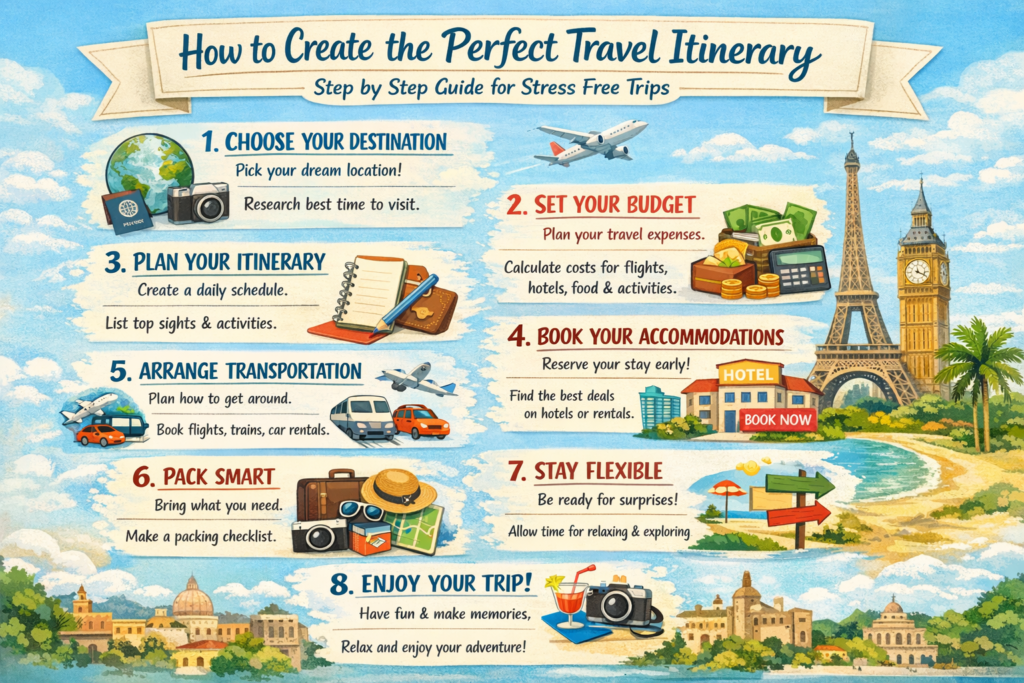
How to Create the Perfect Travel Itinerary. Step by Step Guide for Stress Free Trips
Trip planning feels fun. Poor planning creates confusion. A clear itinerary gives structure. You manage time. You control spending. You avoid missing key places.
This guide shows a simple process for building a clear travel itinerary.
What is a travel itinerary
A travel itinerary is your trip plan. It lists dates. Stay details. Transport plans. Places to visit.
Why every traveler needs an itinerary
An itinerary helps you:
• Stay organized
• Save time
• Control spending
• Avoid confusion
• Track bookings
Structure improves travel quality.
Benefits of planning your schedule
Planning leads to:
• No missed attractions
• Fewer last minute decisions
• Better time use
Planning improves efficiency.
Step 1. Decide your travel goals
Know your reason for travel before planning.
Types of travel goals
Common goals include:
• Relaxation trips
• Adventure trips
• Cultural visits
• Business travel
• Family holidays
Clear goals guide decisions.
Set travel priorities
Choose your focus:
• Sightseeing
• Food experiences
• Relaxation
• Activities
Priorities shape your schedule.
Step 2. Research your destination
Research builds realistic plans.
Identify major attractions
List important places:
• Landmarks
• Museums
• Parks
• Markets
Main places come first.
Understand local transport
Learn:
• Public transport
• Taxi services
• Walking routes
Transport knowledge saves time.
Check travel time between places
Group nearby places together. Reduce travel distance. Improve efficiency.
Step 3. Plan your daily schedule
Daily structure forms the core of your itinerary.
Start with main activities
Place major visits first. Build schedule around them.
Add secondary activities
Optional places fill extra time.
Keep buffer time
Leave extra time for:
• Traffic
• Weather changes
• Rest breaks
Extra time prevents stress.
Avoid crowded schedules
Too many plans cause fatigue. Limit daily activities.
Step 4. Organize your bookings
Booking organization prevents confusion.
Keep reservations together
Store:
• Tickets
• Hotel bookings
• Activity passes
Central storage improves access.
Use digital backups
Save email confirmations. Keep screenshots. Cloud storage improves safety.
Note check in and check out times
Correct timing prevents delays. Prevents booking conflicts.
Step 5. Plan your budget inside your itinerary
Budget tracking improves control.
Estimate daily expenses
Include:
• Food
• Transport
• Entry fees
• Shopping
Estimates prevent overspending.
Track spending
Record daily expenses. Adjust spending when needed.
Keep emergency funds
Backup money protects you during problems.
Step 6. Add safety information
Safety planning improves confidence.
Save emergency numbers
Store:
• Local emergency contact
• Hotel number
• Family contacts
Quick access improves response.
Note hospital locations
Know nearest clinic. Know pharmacy location.
Share your itinerary
Send your plan to trusted contacts. Improves safety.
Step 7. Use technology for planning
Digital tools improve organization.
Use map apps
Maps help with:
• Navigation
• Distance check
• Route planning
Maps improve movement.
Use travel planning apps
Planning apps track bookings. Track schedules. Keep reminders.
Use notes apps
Store itinerary on your phone. Quick access improves efficiency.
Common travel itinerary mistakes
Avoid these errors.
Planning too many activities
Overplanning leads to exhaustion. Limit daily visits.
Ignoring travel time
Distance affects schedule. Always calculate travel time.
No backup plans
Keep alternative places. Weather or closures affect plans.
Ignoring rest time
Rest improves energy. Rest improves mood.
Tips for a flexible itinerary
Flexibility improves travel quality.
Keep free time
Free hours allow exploration. Free time reduces pressure.
Prepare for changes
Weather changes. Delays happen. Flexible mindset improves travel.
Focus on experience
Quality matters more than quantity. Enjoy each place.
Final thoughts on travel planning
A good itinerary balances structure and flexibility. Organization improves confidence. Planning improves experience. Flexibility improves enjoyment.
Plan smart for better travel experiences
A clear itinerary improves travel quality. Organized bookings reduce stress. Time planning improves efficiency. Budget control protects money.