Introduction
In an age where time is one of the most valuable assets, the way people travel has changed significantly. Modern travelers are no longer satisfied with long, exhausting journeys that consume a large portion of their schedule. Instead, they seek faster, more efficient ways to reach their destinations without compromising comfort or convenience. This shift has led to the growing importance of fast travel, which focuses on reducing travel time while enhancing the overall experience.
Fast travel is made possible through advancements in transportation and technology. High-speed trains, direct flights, improved road networks, and seamless digital booking systems have transformed the travel industry. What once took days can now be accomplished in hours, allowing travelers to make better use of their time. This has opened up new possibilities for both leisure and business travel, making distant destinations more accessible than ever before.
For modern travelers, fast travel is not just about speed—it’s about flexibility and efficiency. It enables individuals to plan short trips, attend important events, and explore multiple locations within a limited timeframe. This is especially valuable in today’s fast-paced lifestyle, where balancing work, personal commitments, and leisure can be challenging.
As travel continues to evolve, fast travel has become an essential part of the journey. It reflects the needs of a new generation that values time, convenience, and meaningful experiences, making it a key trend shaping the future of global travel.
What Is Fast Travel and Why Is It Important Today?
Fast travel refers to modern methods of transportation and travel systems that allow people to move quickly and efficiently from one place to another. It includes options such as high-speed trains, direct flights, advanced road networks, and digital tools that simplify booking and navigation. The main goal of fast travel is to reduce the time spent in transit while improving overall convenience and comfort.
In today’s world, fast travel is especially important because time has become a valuable resource. People have busy schedules, balancing work, personal life, and leisure, which leaves limited time for long journeys. Fast travel helps solve this problem by making it possible to reach destinations بسرعة and with less stress. It allows travelers to focus more on their purpose—whether it’s business, relaxation, or exploration—rather than the journey itself.
Additionally, fast travel supports global connectivity. It enables people to explore distant locations, attend international events, and experience different cultures without long delays. This has made travel more accessible and practical for a wider range of people.
Overall, fast travel is important today because it aligns with the needs of modern lifestyles. It saves time, increases efficiency, and opens up more opportunities for travel, making it an essential part of how people move and experience the world.
How Does Fast Travel Save Time for Travelers?
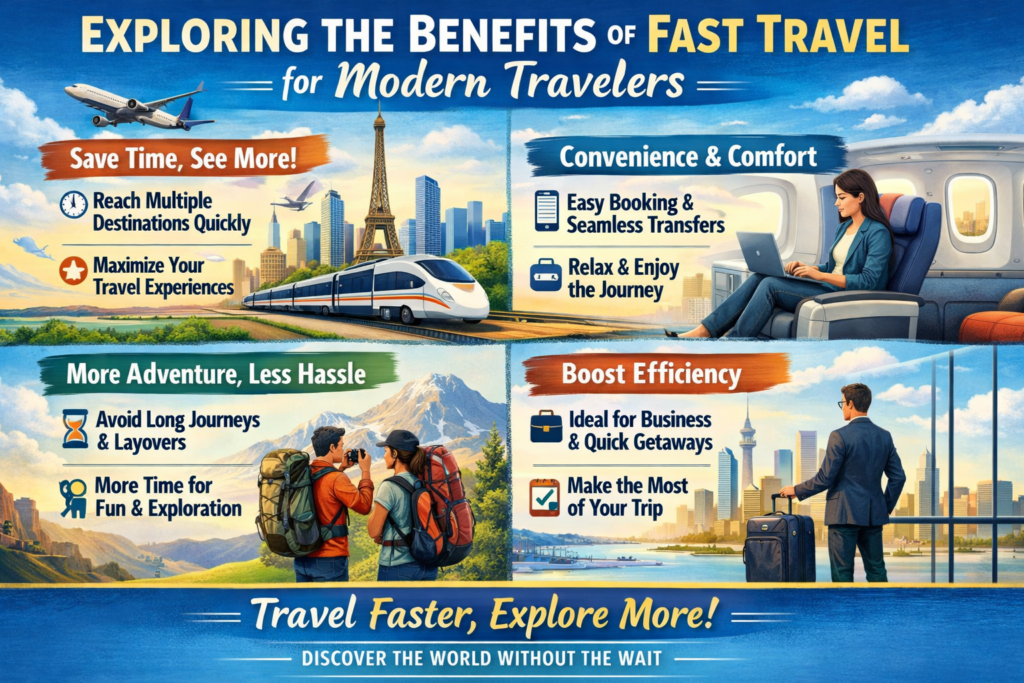
Fast travel saves time for travelers by significantly reducing the duration of journeys through advanced transportation and efficient systems. Modern options like high-speed trains and direct flights allow people to cover long distances in just a few hours, compared to the days it once took using traditional methods. This means travelers can spend less time in transit and more time at their destination.
Another way fast travel saves time is through streamlined processes. Online booking platforms, mobile check-ins, and digital boarding passes eliminate the need for long queues and complicated procedures at stations or airports. Travelers can plan and manage their trips quickly and with minimal effort.
Fast travel also reduces delays and unnecessary stops. Direct routes and improved infrastructure ensure smoother and faster journeys. For business travelers, this means attending meetings or events without losing valuable time, while leisure travelers can maximize their vacation by exploring more in a shorter period.
Overall, fast travel allows people to make the most of their time by combining speed, efficiency, and convenience, making every journey quicker and more productive.
Does Fast Travel Make Trips More Convenient?
Yes, fast travel makes trips more convenient in many ways. Here are the key points:
- Enhanced experience: Less time spent traveling means more time enjoying the destination.
- Saves time: Fast travel reduces long journey durations, allowing travelers to reach destinations quickly.
- Easy booking process: Online platforms and mobile apps make it simple to book tickets in just a few clicks.
- Less waiting time: Digital check-ins and automated systems reduce long queues at airports and stations.
- Direct routes: High-speed trains and direct flights eliminate unnecessary stops and delays.
- Better planning: Travelers can organize short trips or last-minute travel more easily.
- Reduced stress: Smooth and efficient processes make the journey more comfortable and less tiring.
- Improved flexibility: Frequent travel options allow changes in plans without major inconvenience.
How Does Fast Travel Improve Accessibility?
Fast travel improves accessibility by making distant places easier and quicker to reach for a wide range of travelers. With the help of high-speed trains, direct flights, and improved transport systems, locations that once required long and tiring journeys can now be reached in much less time. This has opened up opportunities for people to explore more destinations without being limited by distance or travel duration.
It also enhances global connectivity by linking cities and countries more efficiently. This makes international travel more practical for tourism, business, and cultural exchange. Travelers can now attend meetings, visit new places, or experience different cultures without spending excessive time in transit.
In addition, fast travel reduces the physical effort involved in long journeys, making it more accessible for families, elderly travelers, and individuals with limited time. Improved infrastructure and digital booking systems further simplify the travel process, allowing people to plan and complete their journeys with greater ease.
Overall, fast travel removes many of the barriers associated with distance and time, making the world more connected and accessible for everyone.
Why Is Fast Travel Ideal for Modern Lifestyles?
Modern life is often busy and demanding, leaving little time for long vacations. Fast travel fits perfectly into this lifestyle by enabling short trips and quick getaways. People can travel more frequently without disrupting their schedules, making it easier to maintain a balance between work and leisure.
Conclusion: Is Fast Travel the Future of Travel?
Fast travel is increasingly seen as the future of travel due to its ability to save time, improve efficiency, and enhance overall convenience. As the world becomes more connected and fast-paced, travelers are looking for quicker and smarter ways to move between destinations without long delays or complicated processes.
With continuous advancements in transportation technology, such as high-speed trains, direct international flights, and improved digital travel systems, fast travel is becoming more accessible and reliable. These innovations are reshaping the way people explore the world, making both short and long-distance travel easier than ever before.
However, while fast travel offers many benefits, it also encourages a more efficient approach to how people plan their journeys rather than replacing traditional travel experiences entirely. It allows travelers to maximize their time, visit more places, and enjoy richer experiences within limited schedules.
In conclusion, fast travel is not just a trend but a major shift in the travel industry. Its growing importance suggests that it will continue to play a key role in shaping the future of global mobility, making travel faster, smarter, and more connected.